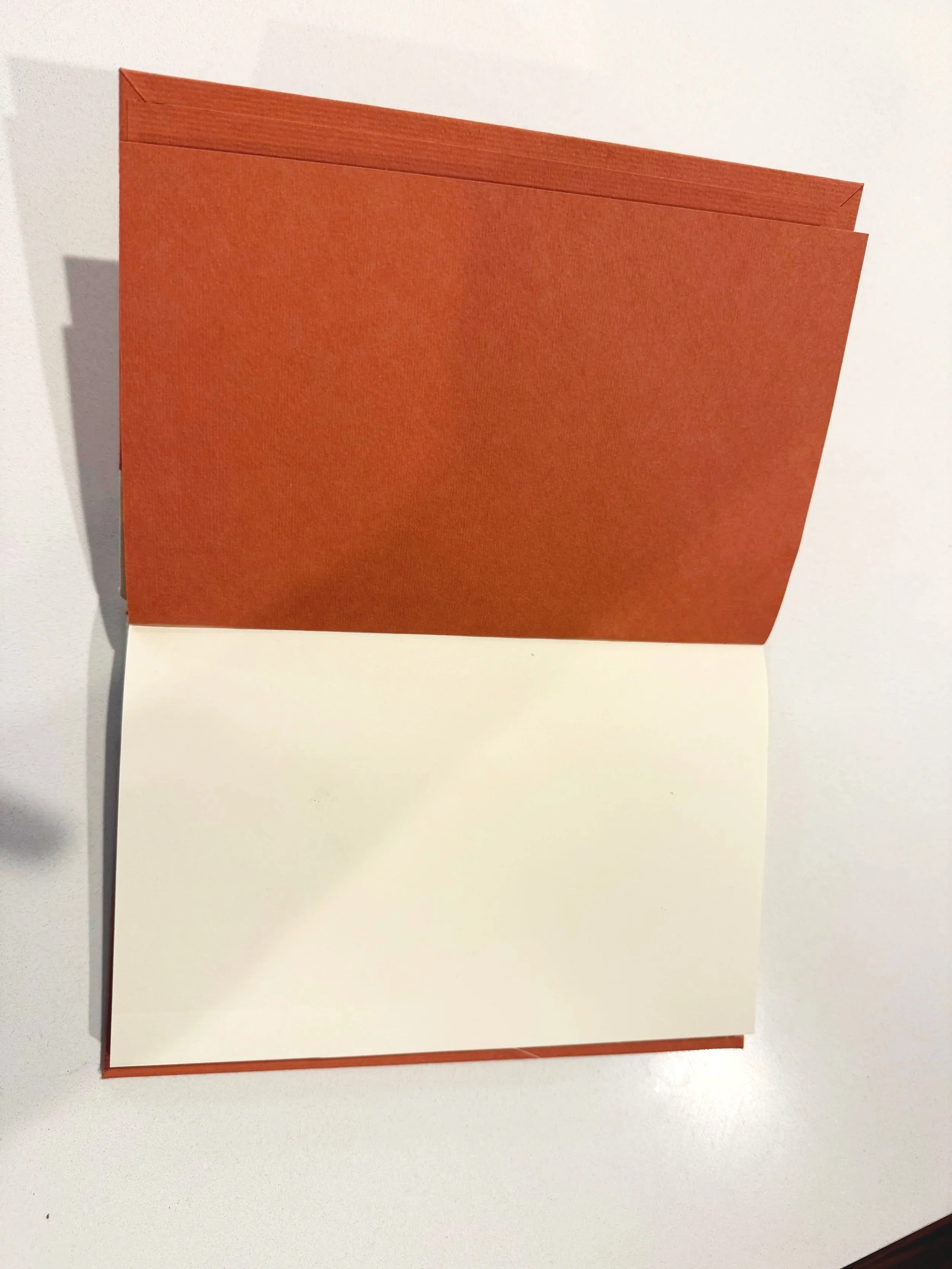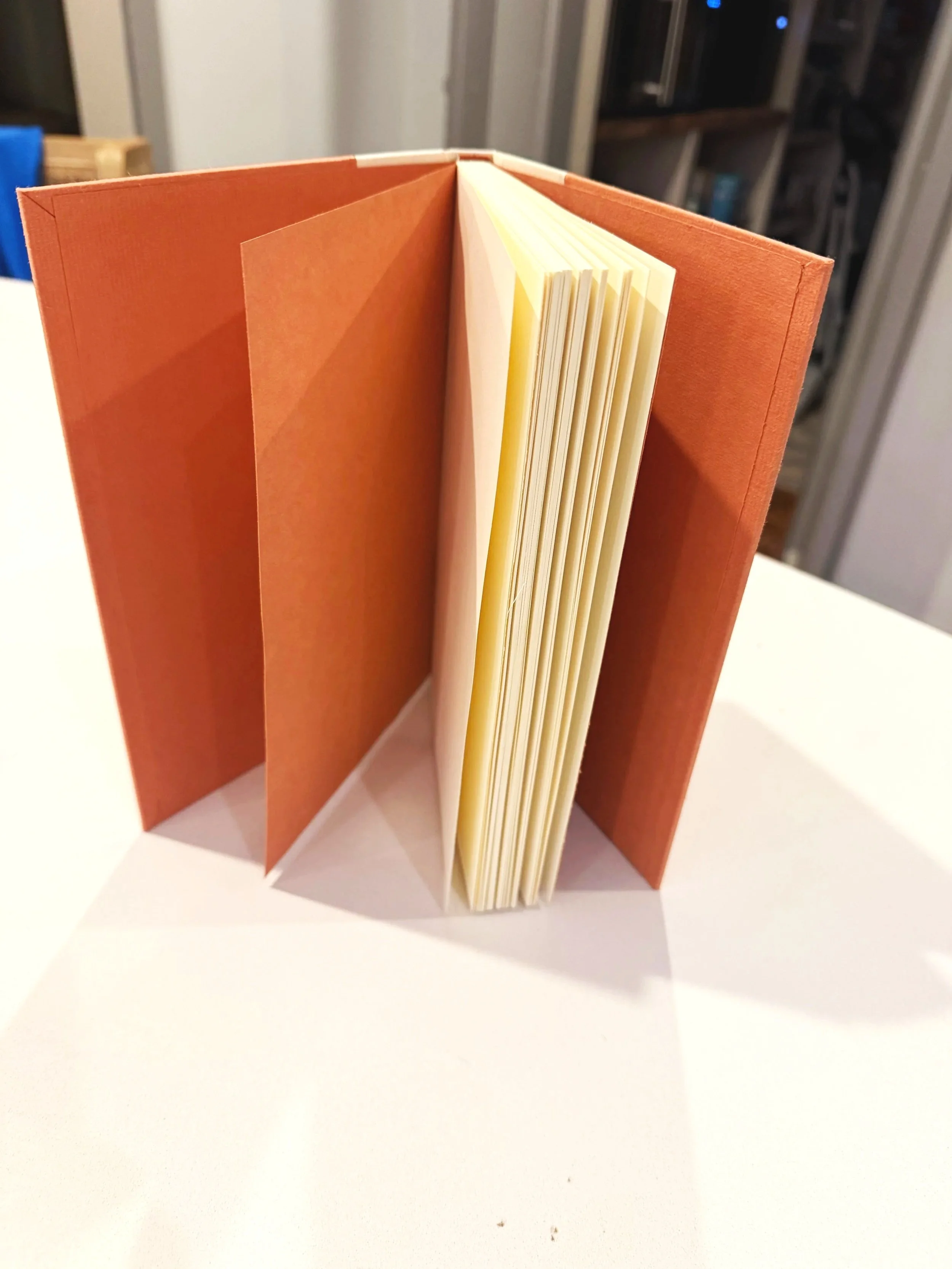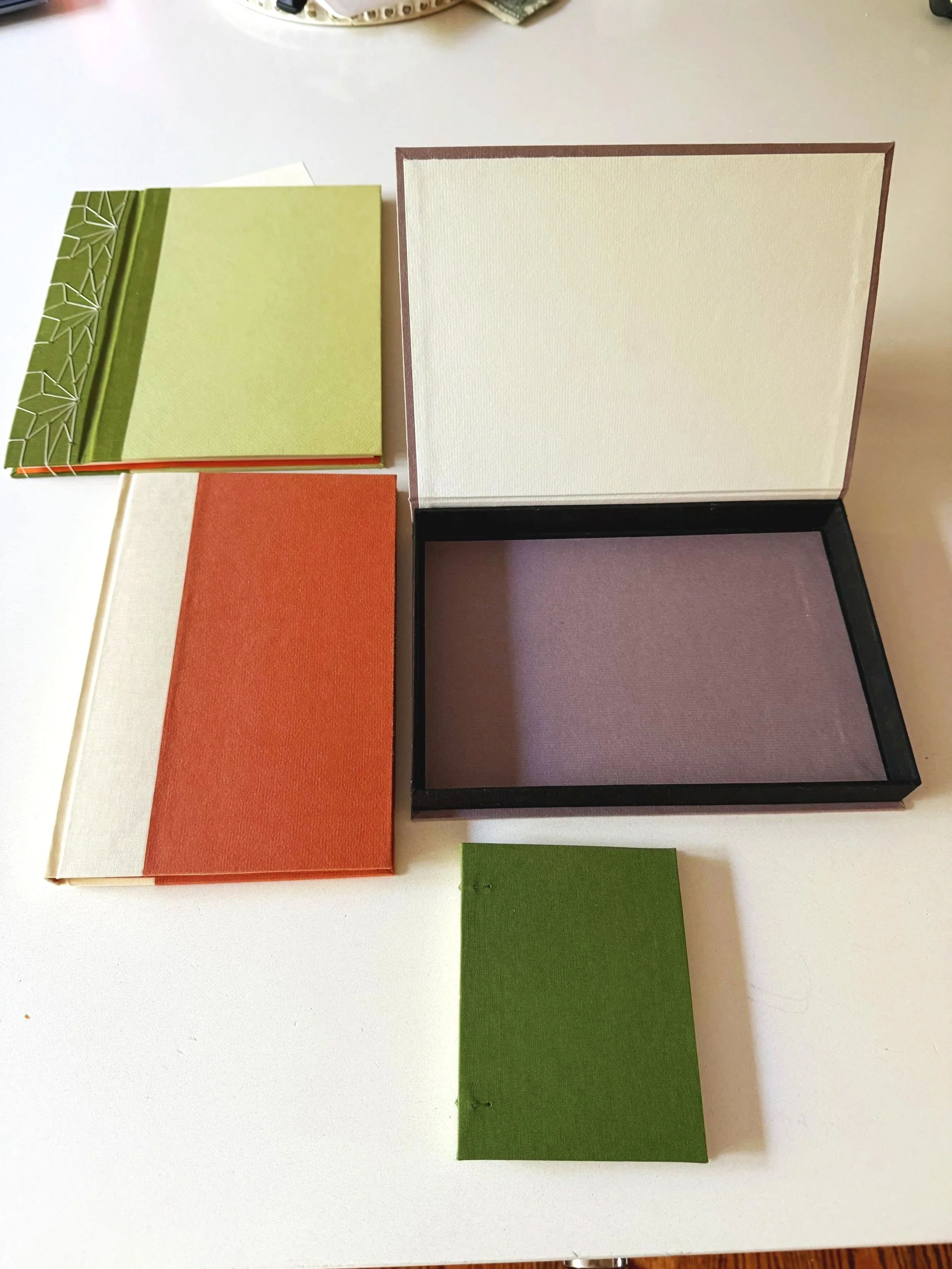
This elective course I took in the fall of 2025, really demonstrates my craftsmanship and attention to detail. Over the course of the semester we were taught several different bookbinding methods and with each one we learned they got more complex. It certainly proved to be a challenge sometimes though, working with the delicate threads and thin needles to create these books from stock materials.
Bookbinding 1
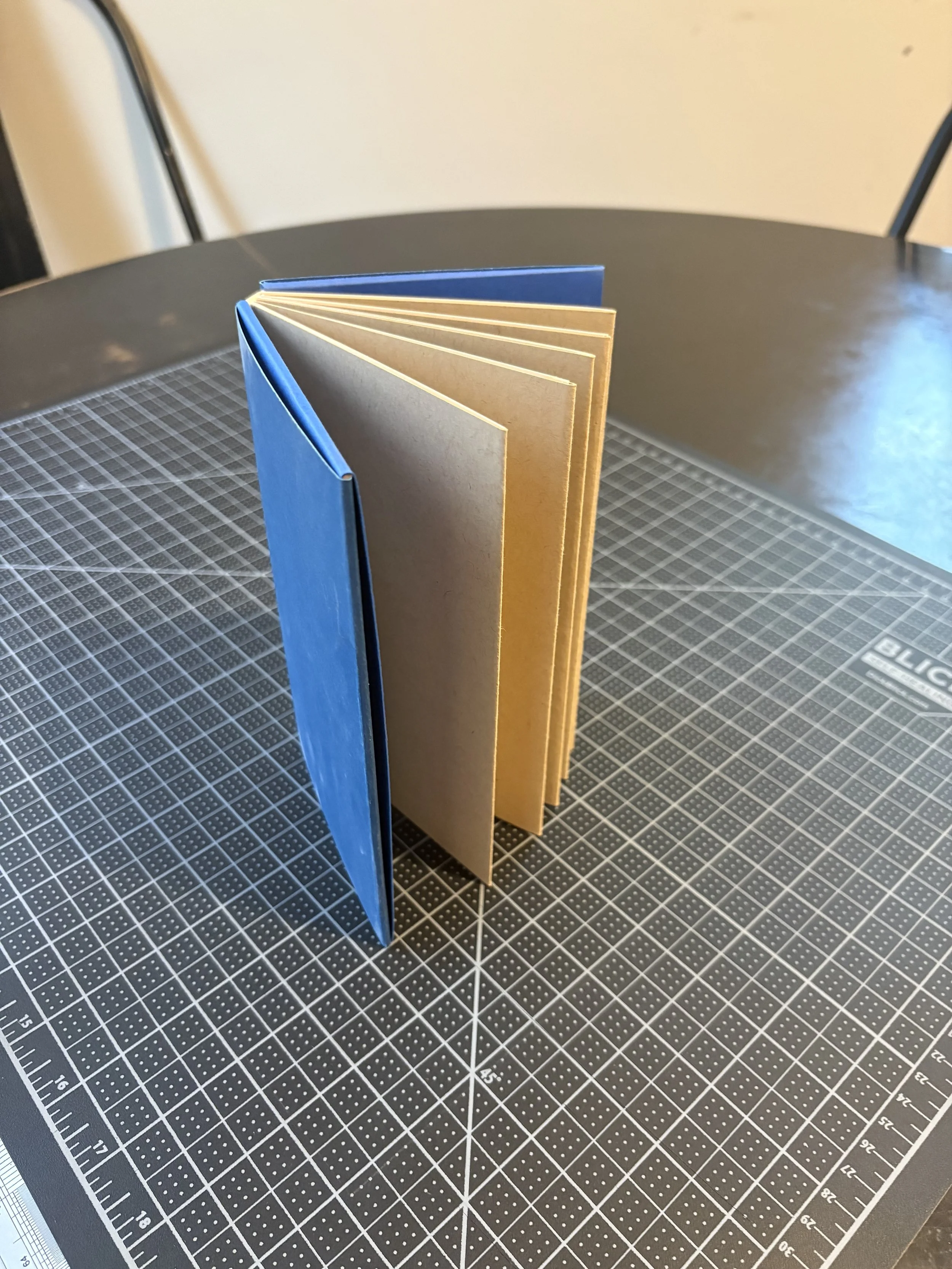
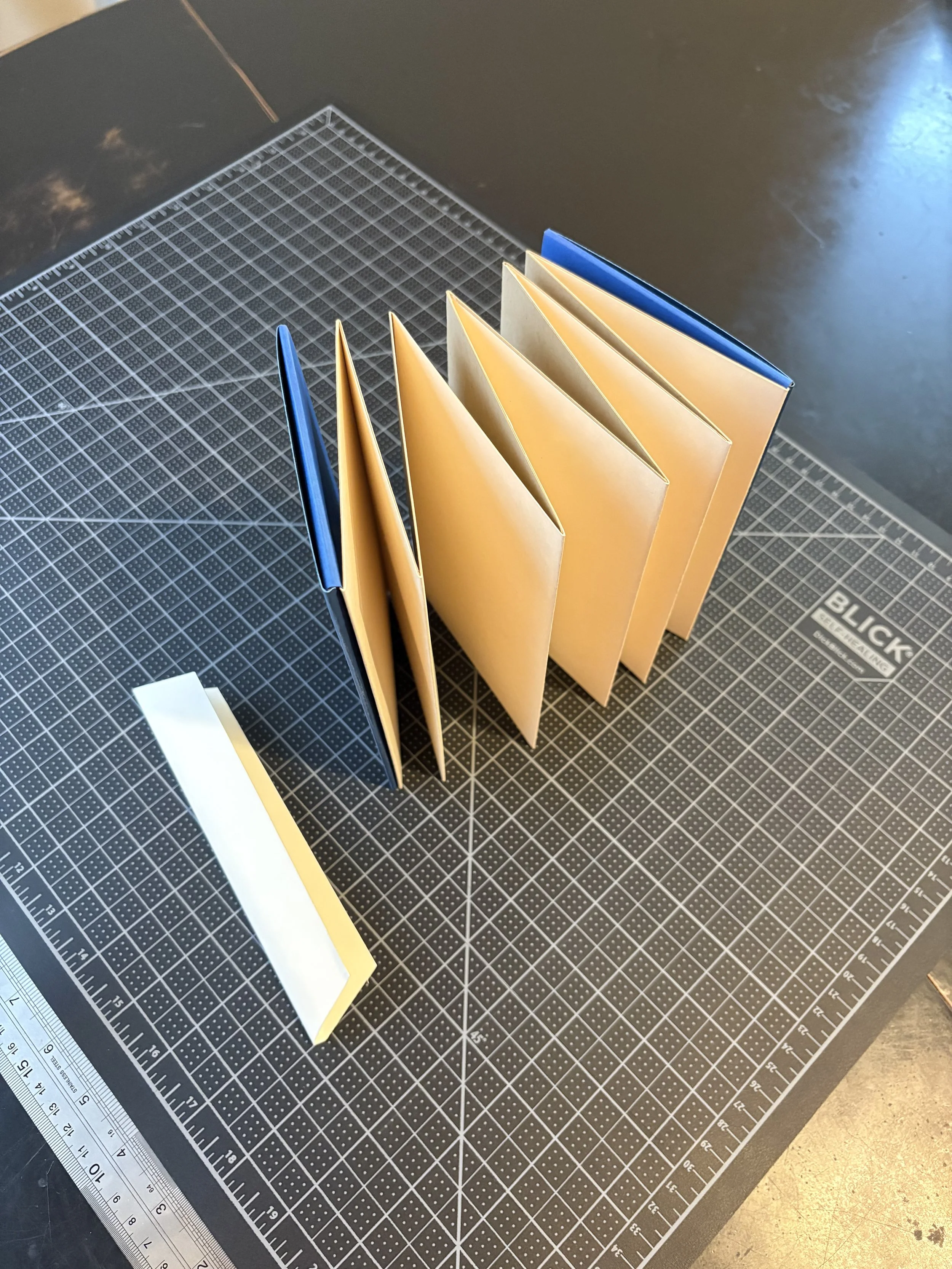
Accordian Style
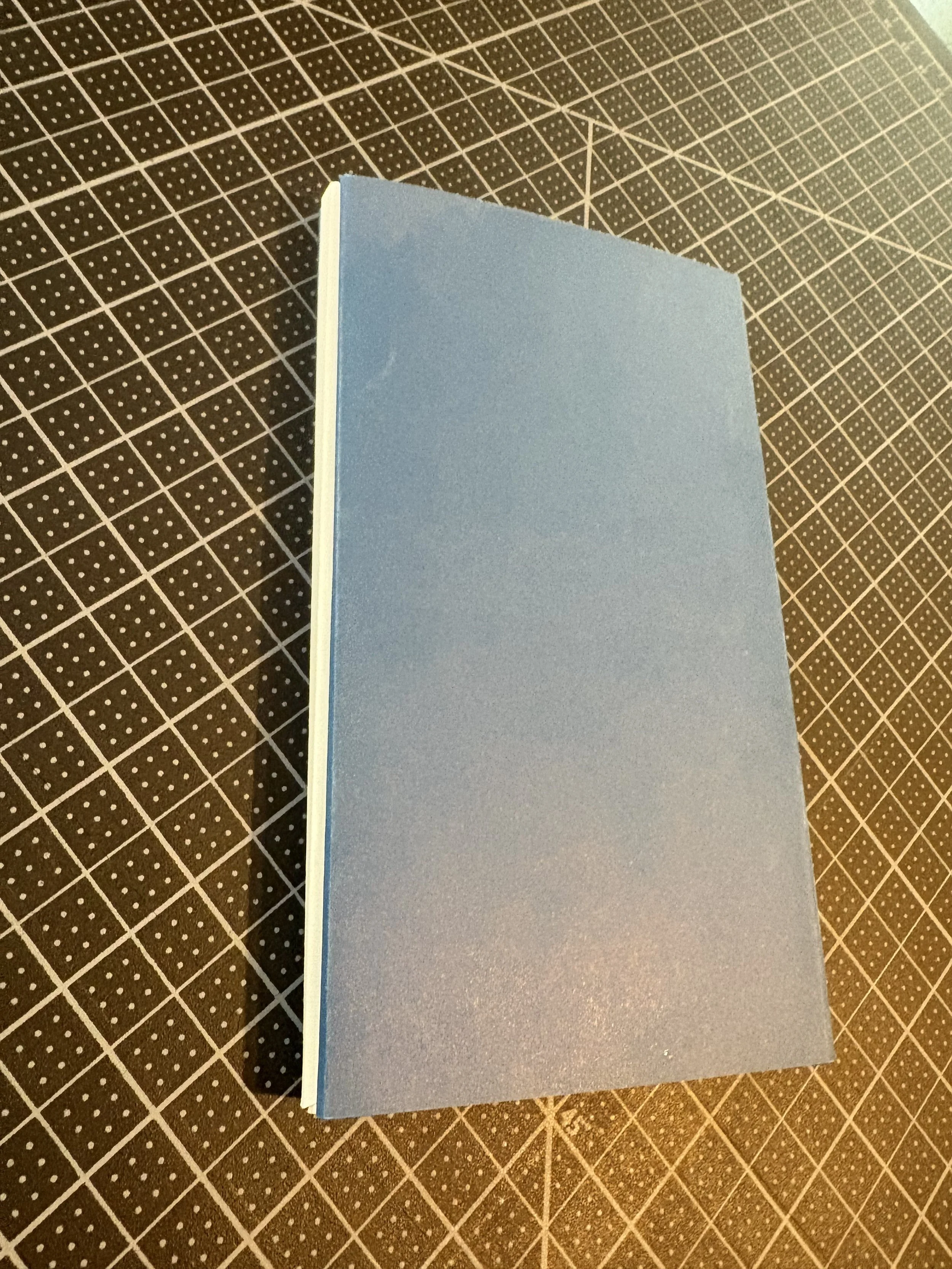
We started out learning methods that did not involve using glue as they were the most simple I feel. This accordion binding method was fun and easy to make and has a cool double sided feature with the removable spine. It’s one limitation is that it can only hold a certain amount of pages before it becomes dysfunctional.
Japanese Stab Binding(Hard-Cover)
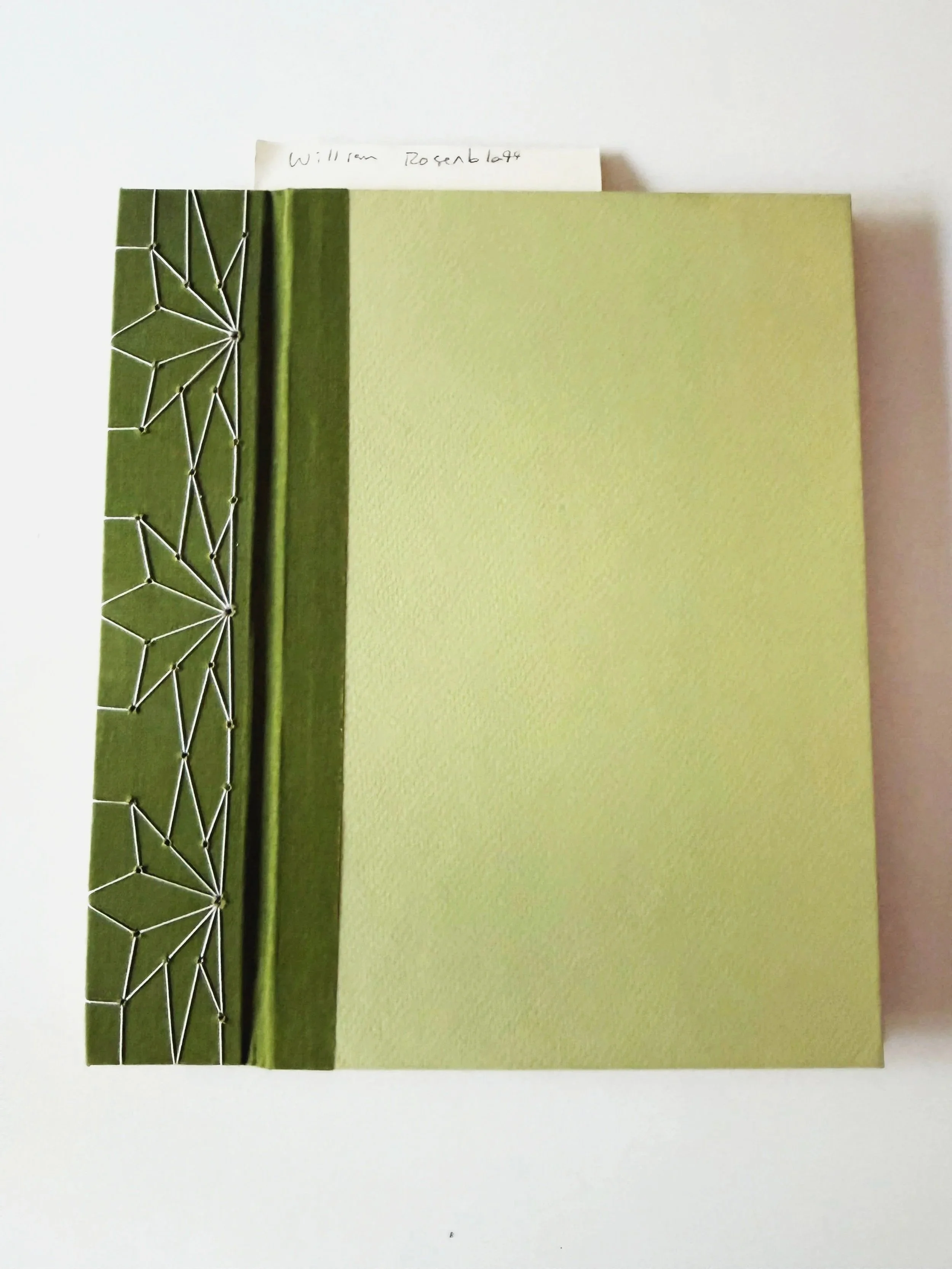
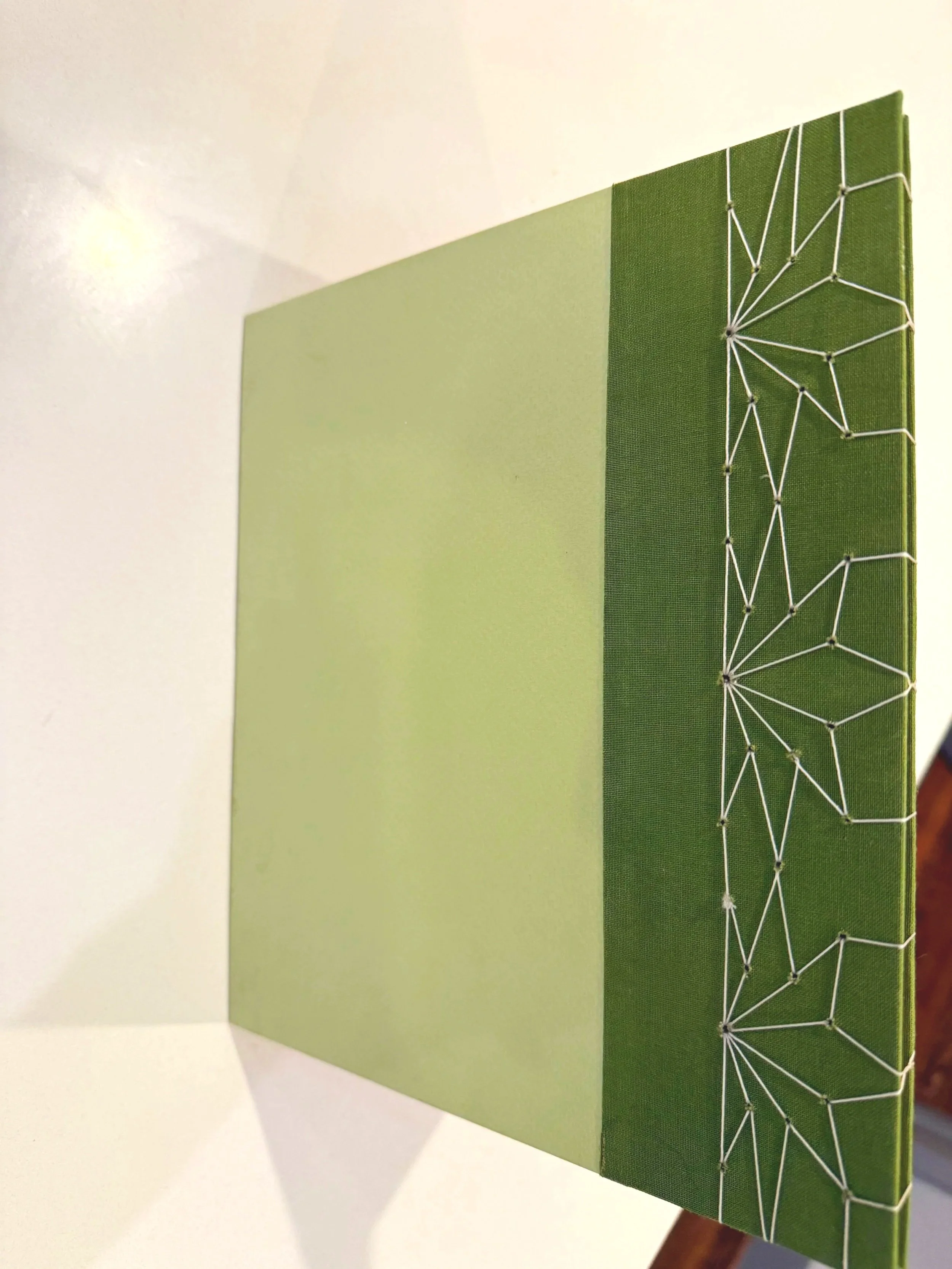
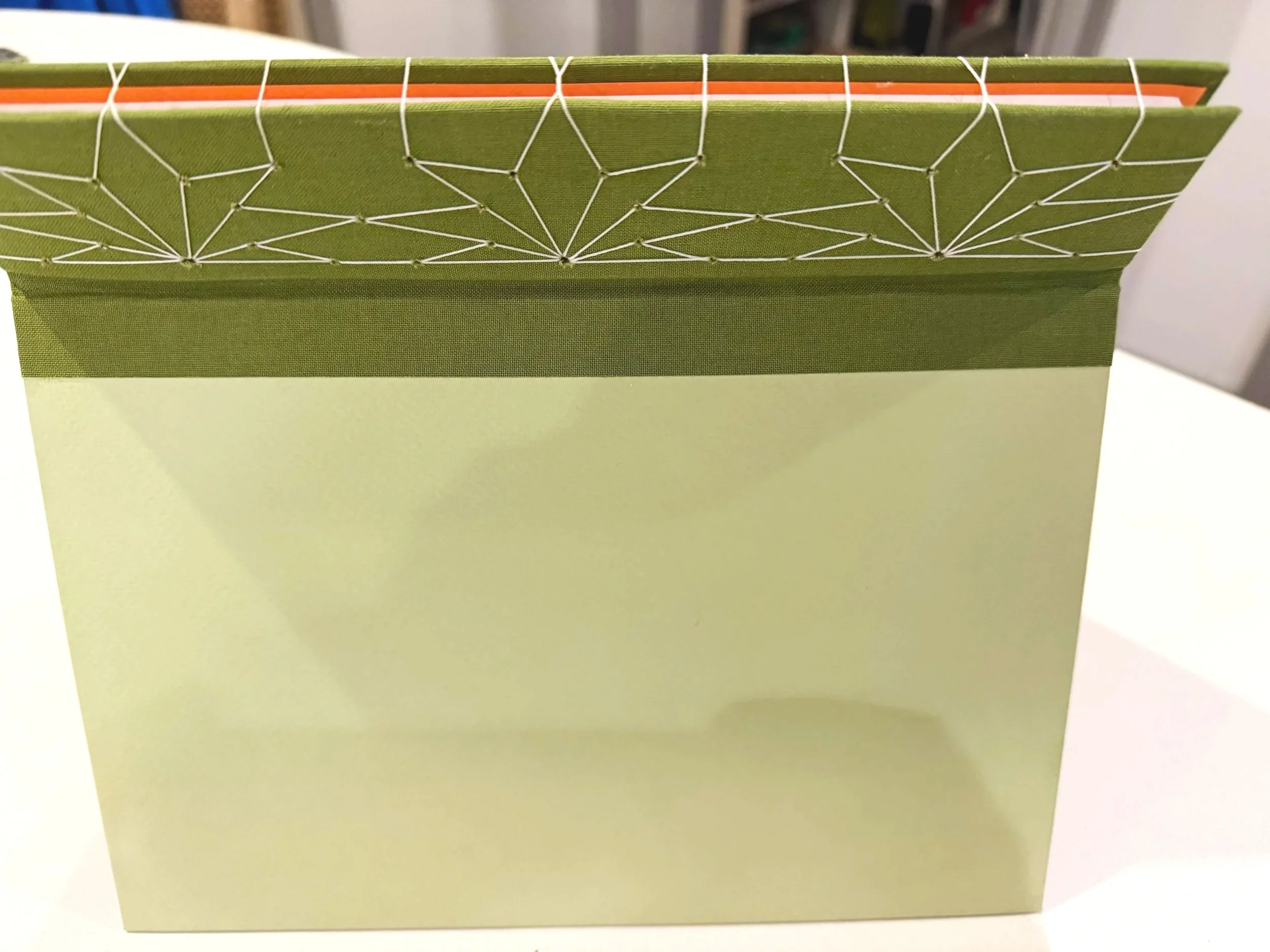
I enjoyed learning the stab binding method, so for my final project, I decided to create a hardcover variant using a maple leaf stitch pattern. Preparing this book to be sewn was the most challenging step. In hindsight, I wish I had used thinner paper for more maneuverability. There were many different components to consider and changes from the original process that made this project extra difficult. Despite the unseen roadblocks, I am proud of how it turned.
Ethiopian Style
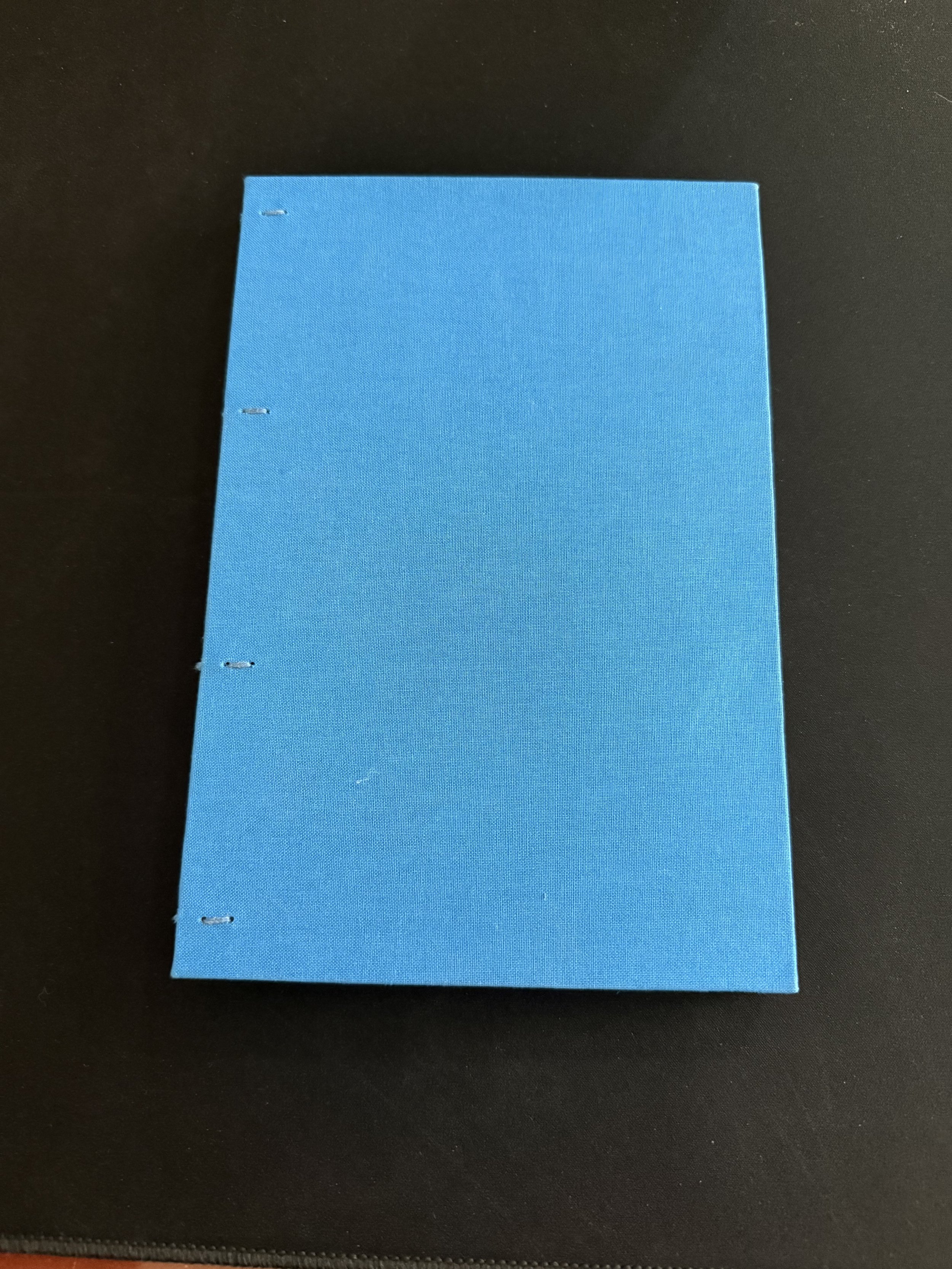
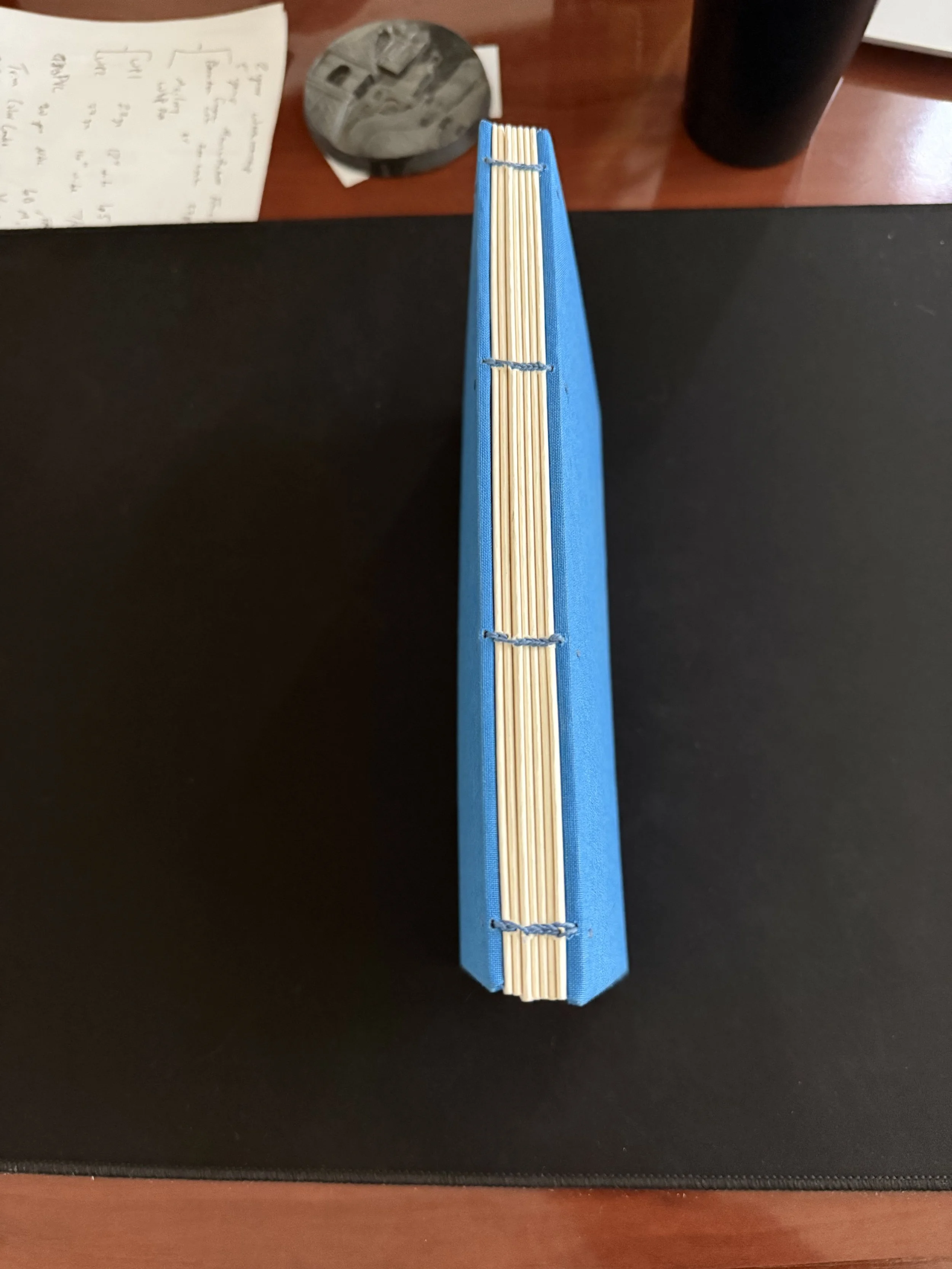
This binding method was also extremely difficult as you had to keep tension as you were sewing it together. It needed to be opened multiple times during the sewing process, which made keeping that tension complicated. Creating the covers was also hard as you had to puncture a hole through the side of the thin material.
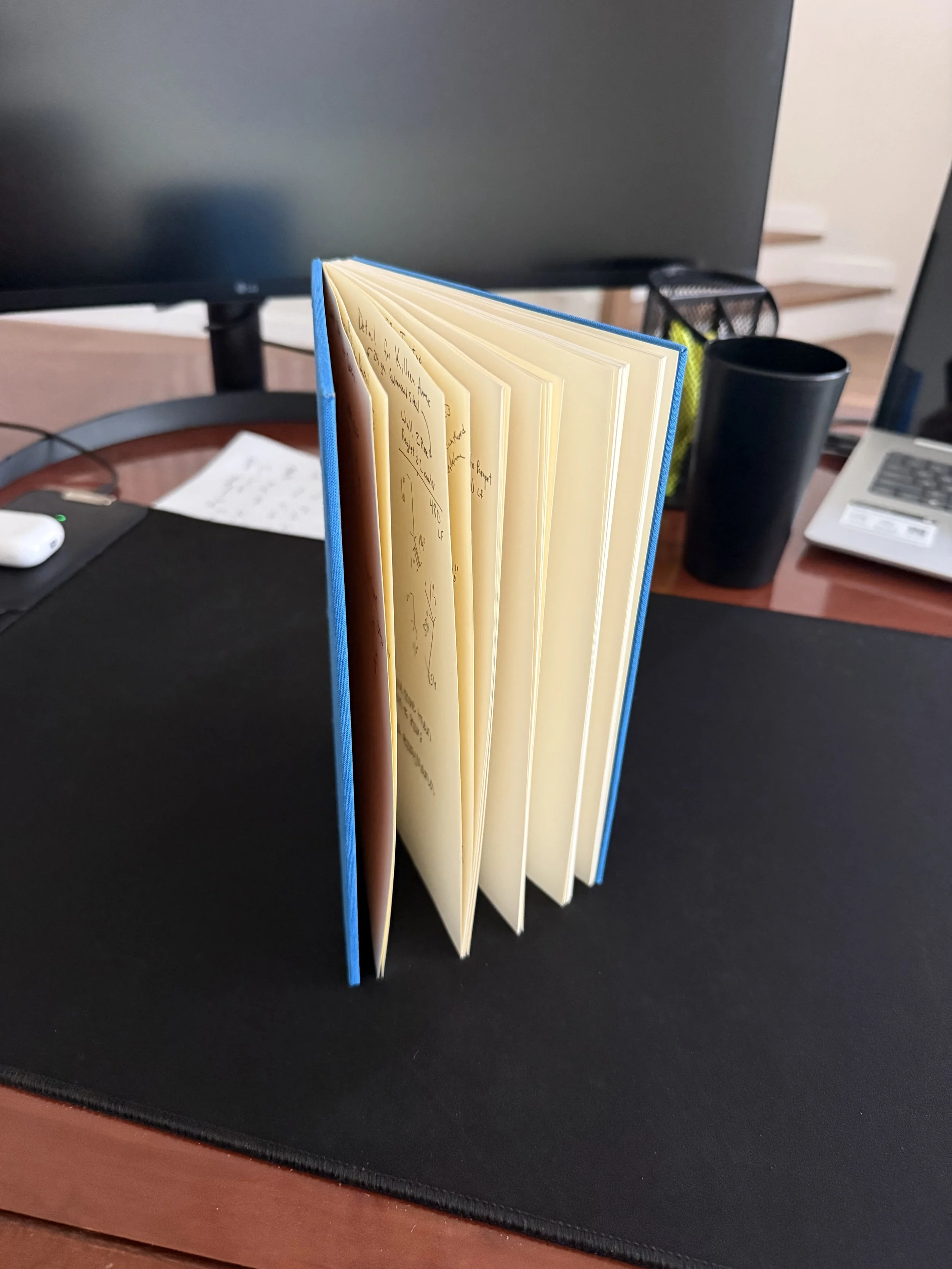
Case Binding
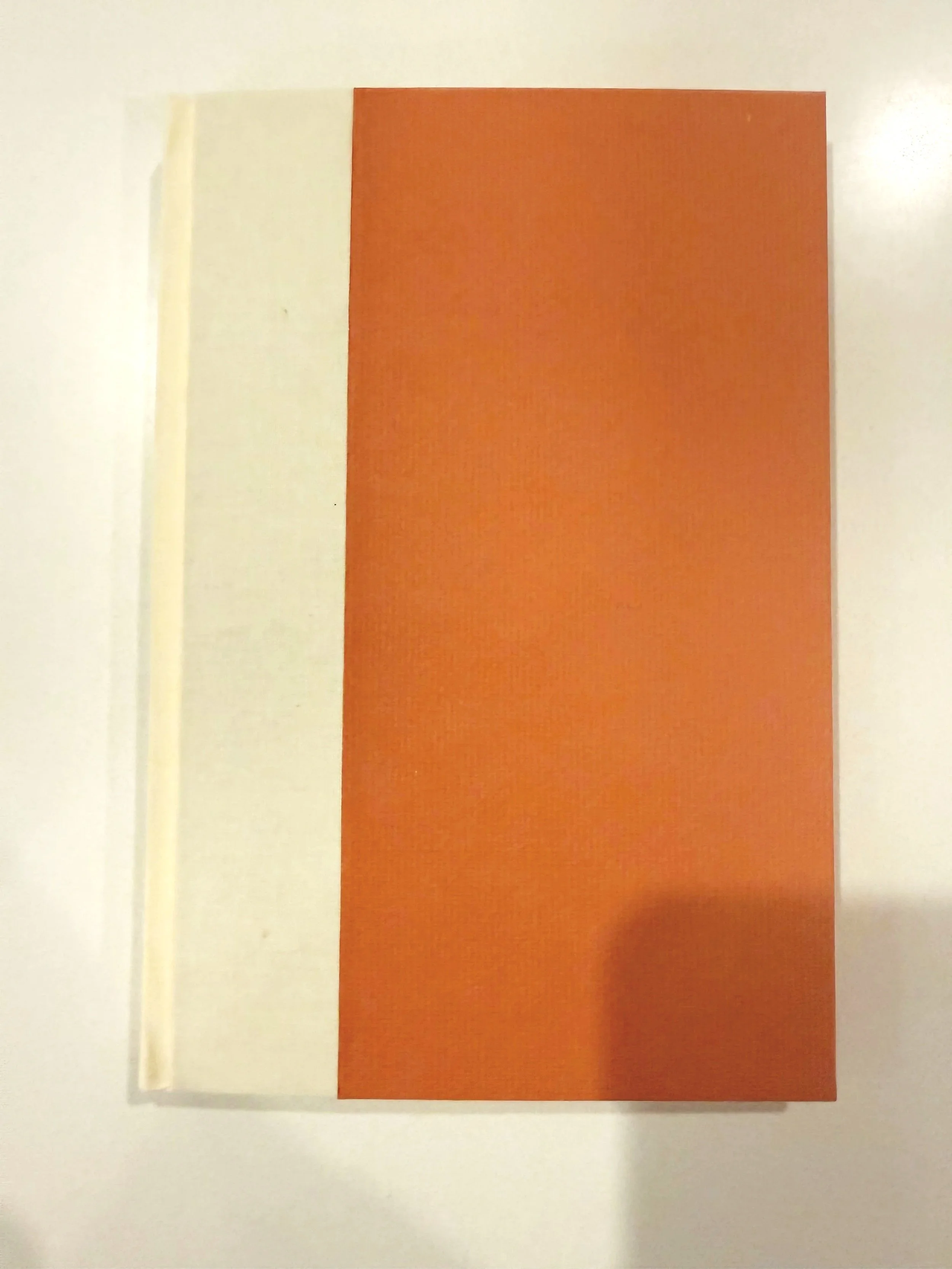
This was the last binding process we learned and it definitely was the most complex. It took three days for the professor to demo, one day for the case, one day for the textblock, and one day to assemble those two pieces together and let it dry. I am really proud of how clean and precise I was with this one and it turned out to be really nice Christmas gift for my mom.